

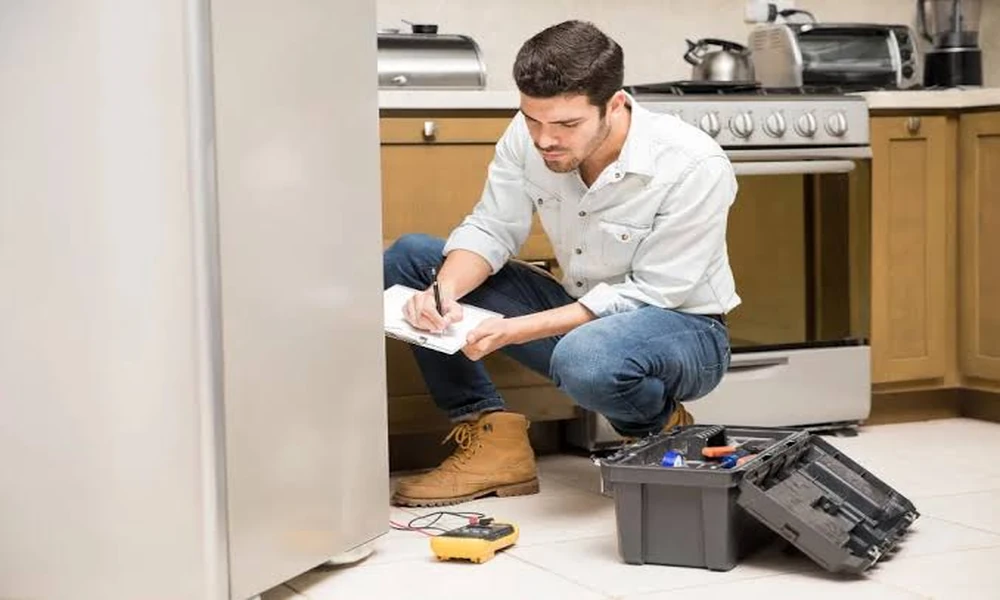
An appliance that works normally on the day of a service visit may still have an unresolved problem. Keep a concise account of what happened, how often it occurred and what normal operation looks like between incidents. Discuss the limits of an intermittent-fault assessment with the provider. Do not provoke the fault or take the machine apart to make it easier to demonstrate.
The awkwardness is familiar: the dishwasher would not finish yesterday, the washer stopped twice last week, or a refrigerator made a sound nobody hears today. By the appointment, everything seems ordinary. It can feel as though there is no longer anything useful to say. In fact, the history is now the most important information the household can contribute.
Give the missing fault a timeline
Begin with the first incident you can remember with reasonable confidence. Note whether it was a single event or the start of a repeating pattern. Approximate honestly when necessary. An account that says it happened twice over the past week is more useful than an invented precise date, especially if the date distracts from the circumstances you remember clearly.
Describe the appliance’s action at the time. Did the programme stop, did the display change, did the sound begin during an otherwise ordinary operation, or did the household discover an unexpected result afterwards? These descriptions give the technician something concrete to consider. Saying that the machine became unreliable expresses the household impact but leaves the actual behaviour unexplained.
Include what happened next. Perhaps someone cancelled the programme, changed a setting, consulted the manual or left the appliance unused. Explain that sequence without presenting the outcome as proof of a repair. A machine working after a pause does not, on its own, establish why it stopped. Equally, an incident that has not repeated is still part of the history.
Separate observations from interpretations. You may have heard a click, while another person concluded that a motor was failing. Retain the click in the account and label the diagnosis as a guess if it needs mentioning at all. This keeps a confident-sounding explanation from overshadowing evidence that may point in a different direction once the machine is assessed.
A recording is useful only when it is safe to make
If a symptom occurs during ordinary use and you can safely record it from outside the appliance, a short video or photo may help convey what you mean. Show the relevant display or capture the sound without moving the machine or removing a cover. Avoid recording so much unrelated footage that the useful moment becomes difficult to find.
Safety takes priority over documentation. Do not stand in water near electrical equipment, reach into moving machinery, bypass a door mechanism or continue an alarming operation for the sake of a better recording. Smoke, sparks or another immediate danger calls for appropriate emergency action, not a video. A missing clip is never a reason to recreate a hazardous situation.
Use the model’s manual for owner instructions rather than following a repair sequence from an unrelated appliance. Similar control panels and code formats can be misleading. If you already have a photo of a message, preserve the original and its context. The complete display may matter more than a search result that appears to translate one part of it.
A recording is evidence of an observed moment, not a complete inspection. It cannot show every condition inside or around the appliance. Let it support your account instead of treating it as a substitute for assessment. The technician may need information that the camera did not capture, including what the machine was doing before the clip started.
Discuss an inconclusive result in advance
When booking, say that the problem is intermittent and that the appliance may operate normally during the visit. Ask what the diagnostic appointment can reasonably establish in that situation. The provider can explain its process and any information it wants beforehand. This is a better starting point than waiting until arrival to reveal that the complaint occurs only occasionally.
Confirm how the diagnostic charge works if the fault cannot be reproduced or the cause remains uncertain. Ask how findings will be explained and whether further observation could be needed. There is no benefit in treating every possible outcome as guaranteed. Understanding the appointment’s scope lets you approve an assessment with a realistic view of what may remain unresolved.
If a component is recommended, ask how the evidence connects that recommendation to the reported problem. You do not need to demand certainty beyond what the assessment can support. You do need to understand whether the recommendation follows a confirmed finding, a further diagnostic step or a tentative explanation. Those distinctions matter when deciding what work to authorise.
An honest inconclusive result can still narrow the next step. The technician may explain what was assessed, what could not be confirmed and which future observations would be useful. Keep that explanation. Repeating the entire service search without preserving it can leave the household paying to retell the same incomplete history while losing the value of the first assessment.
Let new evidence change the next step
If the symptom returns, add the new event to the existing account rather than starting from scratch. Note whether it resembles the earlier incident and whether any detail differs. Contact the provider through the agreed route. Do not assume that a recurring display, sound or interruption automatically proves a specific replacement part is now required.
A short report to Capital Appliance Repair in Ottawa could read: “The washer stopped during two ordinary loads this week. It completed the next load. I have the model number and a photo of the message, but I have not changed any parts.” That example gives the service desk a sequence and makes the uncertainty clear. Add the actual message and circumstances from your own machine rather than borrowing someone else’s diagnosis.
Until the cause is established, keep the status truthful: the appliance has an unresolved intermittent concern. Follow any instructions about use, preserve the evidence already gathered and update the account when something material changes. A normal afternoon is welcome, but it should not erase the information needed to understand what happened on the difficult ones.
