

Wet carpet is one of the most misjudged problems in any water loss. The surface can feel only damp while the cushion underneath holds far more water, and the concrete slab under most North Texas homes keeps releasing moisture long after the fibers feel dry to the touch. Whether that carpet gets saved or carried out to the curb depends less on how it looks and more on a series of measurements and decisions that restoration technicians make in a set order, most of it shaped by the IICRC S500 standard for professional water damage restoration.
That order is everyday work for United Cleaning & Emergency Restoration, a family-owned Hurst company that has served Fort Worth, Arlington and the wider DFW Metroplex since 1979. The business began in carpet care and grew into full water, fire, storm and mold restoration, so its IICRC-certified technicians can carry the same carpet from emergency extraction through drying, cleaning, odor treatment and reinstallation without passing it to another contractor. Crews answer around the clock and work directly with insurance companies, which means a homeowner standing in a soaked living room can make one call and have a single team handle everything from the first meter reading to the final stretch.
The Phone Call Shapes the Truck
The process starts before anyone arrives. A dispatcher asks where the water came from, roughly when it started, how many rooms are affected, whether it has reached walls or a lower floor, and whether outlets or appliances sit in the wet area. Those answers give the job a working classification and decide what gets loaded: extraction equipment, a weighted extraction tool for carpet, air movers, low grain refrigerant dehumidifiers, carpet knives and protective gear.
Naming the Water Before Touching It
On site, the first job is stopping the source and checking electrical safety. The second is confirming the category of water, because S500 ties the fate of carpet and pad directly to it.
Category 1. Water from a sanitary source, such as a supply line, a refrigerator line or a failed water heater. Carpet and cushion in this category are often restorable in place when work begins quickly.
Category 2. Water carrying significant contamination, such as washing machine discharge, dishwasher overflow or a toilet overflow with urine. The carpet can usually be cleaned and kept, but the pad is removed and discarded.
Category 3. Grossly contaminated water, including sewage and rising floodwater from outside. Carpet and pad both go, and technicians work in full protective equipment.
Categories also change with time. Clean water sitting in a warm house picks up soil and microbes from the carpet and slab, so a supply line leak discovered after a long summer weekend in DFW is often treated as Category 2 even though it started clean.
Mapping Moisture Past the Stain
The visible wet spot is almost always smaller than the wet area. Water travels under carpet through the cushion, follows the slab, and wicks up drywall behind baseboards. Technicians use penetrating and non-penetrating moisture meters along with a thermal camera, then sketch a moisture map of every room involved. They also take readings in an unaffected room to set the dry standard, the target the wet materials must match before the job ends. This step also assigns a class from 1 to 4 describing the evaporation load; a fully wet carpeted room with wall wicking usually lands in Class 2, while soaked concrete or hardwood can push a job into Class 4.
Extraction Does the Heavy Lifting
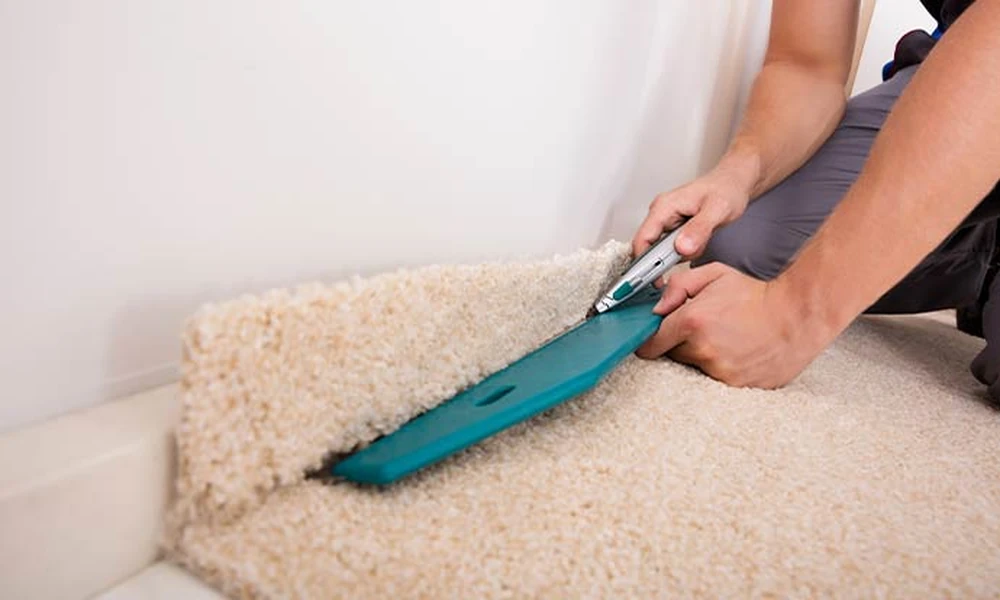
Pulling water out as liquid is far cheaper than evaporating it. Weighted extraction tools compress the carpet and cushion while a vacuum draws water out, removing much more than a standard wand pass. Then comes the pad decision. With Category 1 water, crews can often float the carpet, releasing it from the tack strip and blowing air underneath while the pad dries in place. NC State Extension guidance on water-damaged carpets reflects the same logic, noting that padding wet with clean water for under 48 hours, with only part of a room affected, can be restored. In Category 2 losses, the pad is cut into strips and removed, the carpet is folded back, and any contaminated tack strip comes out with it.
Building the Drying Chamber
Air movers are angled to sweep across wet surfaces, and dehumidifiers are sized to the class and the cubic footage of the space. North Texas weather matters here. Summer and spring storm season often bring outdoor dew points high enough that opening windows adds moisture, so crews keep the house closed and let dehumidifiers do the work. The slab is the slow part. Concrete holds water and gives it up gradually, and carpet reinstalled over a damp slab tends to bring the musty smell right back. Antimicrobial treatment is applied where contamination or delay makes microbial growth a real risk.
Daily Checkpoints That Steer the Job
Every visit includes temperature, relative humidity and grains per pound readings inside the room, at the dehumidifier exhaust and outdoors, plus fresh material readings. Each reading is logged for the insurance file.
| Checkpoint | What the technician records | What it sets in motion |
|---|---|---|
| Arrival | Source, contamination clues, elapsed time | Category, protective gear, pad decision |
| Moisture map | Readings beyond the stain, wicking height on walls | Chamber size, baseboard removal |
| First day psychrometrics | Grains per pound in the room versus dehumidifier outlet | Adding or removing dehumidifiers |
| Daily material readings | Slab, drywall and carpet compared with the dry standard | Relocating air movers, closing dry zones |
| Odor or visible growth | Location and contiguous area of growth | Containment and mold remediation steps |
| Final readings | All materials matching the dry standard | Cleaning, new pad, reinstallation |
When Growth Changes the Paperwork
Carpet left wet too long can develop growth on the tack strip, the pad and the bottom of the drywall. At that point the work follows IICRC S520 for mold remediation, and Texas law adds its own layer. Under rules explained in the Texas Department of Licensing and Regulation mold program FAQ, visible mold covering 25 contiguous square feet or more generally requires a licensed mold assessor to write a protocol and a licensed remediation contractor to carry it out, and the same company cannot do both on one project. A passed clearance leads to a Certificate of Mold Damage Remediation, a document that can matter later for insurance and resale.
Cleaning, Restretching and Resetting the Room
Only after final readings match the dry standard does the carpet get cleaned with hot water extraction, deodorized and inspected for delamination, where the secondary backing separates from the primary. Delaminated carpet is replaced. Otherwise new pad goes down, damaged tack strip is swapped out, and the carpet is reinstalled with a power stretcher because carpet that has been wet and dried tends to relax into ripples. Baseboards return last, followed by a walkthrough with meter readings to confirm the room is truly dry. Each step depends on the measurement before it, which is why fans alone, without extraction or monitoring, so often leave a carpet that looks fine for a week and then starts to smell.
