

Most people only notice their driveway when something goes wrong. A dark patch spreads from under the car. A slick green film forms where the lawn sprinklers hit. Pavers that were once tan turn a muddy gray. In a warm coastal town, all of this can happen within a single rainy season, and the driveway is usually the first part of the property guests see up close.
Homeowners searching for Lighthouse Point pressure cleaning driveways tend to want more than a quick rinse. They want to know why the stains keep returning, whether cleaning damages the surface, and how long the results will hold. Exterior cleaning crews working across Southeast Florida, including the Pompano Beach based team at softtouchpw.com, deal with those questions constantly, because a driveway in this climate is under steady pressure from moisture, heat, salt air and organic debris.
The good news is that a driveway cared for on a sensible schedule really can stay sound for longer. The answer depends on what it is made of and what is sitting on top of it.
Grime Is Not Just Cosmetic
Concrete and pavers look tough, but both are porous. Water, oil and organic matter seep into tiny openings in the surface. Once there, they cause slow problems that a casual glance misses.
Mildew and algae hold moisture against the surface long after rain stops. That constant dampness encourages surface wear and makes the driveway slippery, especially on sloped sections near the street. Oil from vehicles soaks into concrete and breaks down certain sealers. Leaves and berries from trees break down into acidic residue that stains and etches. In coastal areas, salt carried on the breeze settles into joints and pores and can speed up surface deterioration over time.
Cleaning removes these materials before they work deeper. It also exposes cracks, sinking spots and loose pavers early, while repairs are still small.
Concrete, Pavers and Coatings Need Different Care
Not every driveway should be treated the same way, and this is where a lot of DIY jobs go wrong.
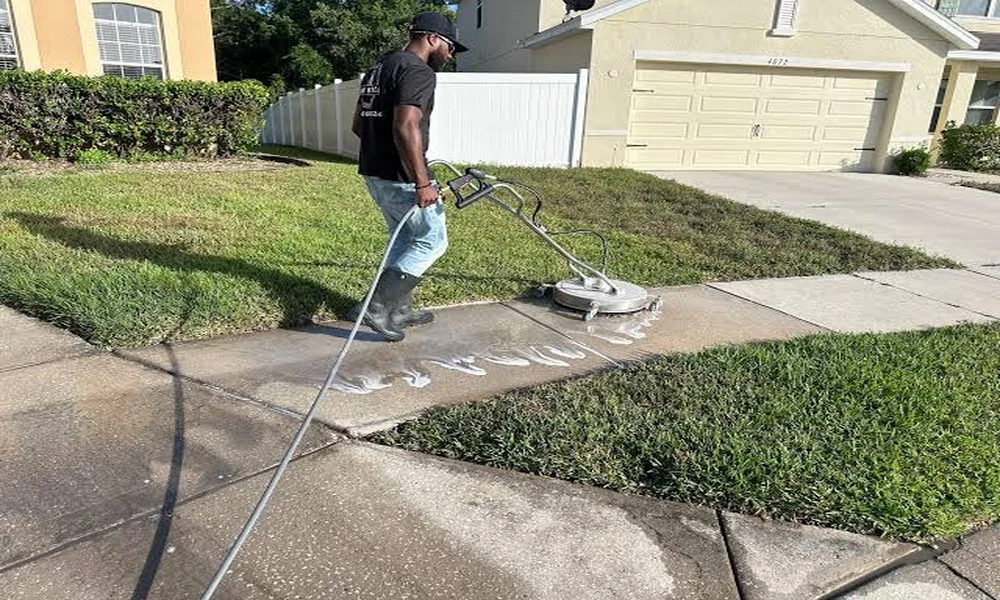
Plain poured concrete is the most forgiving. It handles higher pressure well, especially when cleaned with a rotary surface cleaner. That tool spins nozzles inside a round hood held close to the ground, which gives an even finish instead of the striped, wavy look a handheld wand often leaves.
Pavers need a lighter approach. The sand between them locks the stones together and keeps weeds and ants out. Blast it away with too much pressure and the pavers can shift, wobble or sink. A careful paver cleaning usually ends with fresh joint sand swept back in, often a polymeric type that hardens slightly once wet.
Decorative finishes like stamped concrete, spray textured coatings and painted surfaces are the most delicate. High pressure can peel coatings or dull the color. These surfaces often respond better to a cleaning solution followed by a gentle rinse.
Stains That Behave Differently
Part of what makes driveway cleaning tricky is that stains have different causes, and each needs its own treatment:
- Mildew and algae show up as black or green patches, usually in shade or near sprinklers. A diluted sodium hypochlorite treatment kills the growth so it does not bounce back quickly.
- Rust streaks in orange or brown often come from irrigation systems drawing iron rich well water. Bleach does nothing here. These need an acid based rust remover.
- Oil and fluid spots need a degreaser that lifts the oil out of the pores before rinsing.
- Tree stains from black olive, sea grape and similar trees leave dark marks that may need repeat treatment.
- Tire marks sit on the surface of sealed driveways and usually come off with a degreaser and surface cleaner combination.
Treating every stain with the same blast of water explains why so many driveways look clean for a week and stained again soon after.
What Happens to the Wash Water
Driveways slope toward the street for a reason. Everything that gets washed off them heads toward storm drains, and in canal lined communities those drains often lead straight into local waterways. The U.S. Environmental Protection Agency explains in its overview of nonpoint source pollution that runoff moving across the ground picks up pollutants and carries them into nearby water bodies.
For driveway cleaning, that means oil, degreasers and cleaning solutions should not be rinsed carelessly into the gutter. Responsible operators pick up oil residue, use measured amounts of chemicals and steer runoff toward lawns or contained areas where possible. Homeowners cleaning their own driveway can do the same by soaking up oil spots with absorbent material before washing and avoiding heavy chemical use near the curb.
The Local Climate Adds Up Fast
Coastal South Florida gives driveways very little downtime. Summer brings near daily afternoon storms, and the humidity barely drops overnight. Shade from mature trees keeps parts of the driveway damp for hours. Irrigation systems run regularly, often throwing water onto the same strip of concrete every morning.
Waterfront properties face extra exposure. Salt air drifts inland, boats and trailers park on driveways and drip water and fluids, and outdoor living spaces often extend from the driveway to the dock. All of this means a driveway near the water usually needs attention more often than one a few miles inland.
Storm season adds another reason to keep things clean. Driveways covered in debris and slick growth are harder to inspect after heavy weather, and clogged drainage areas near the edges can send water pooling toward the house.
Sealing Locks in the Work
Cleaning removes the problem. Sealing slows down its return.
A good sealer reduces how much water, oil and organic matter can soak into concrete or pavers. On pavers, it also helps stabilize the joint sand and can bring back some of the original color. Sealers come in several types, including penetrating sealers that sit inside the surface and film forming sealers that create a light sheen on top. The right choice depends on the material, how much traffic the driveway sees and how much shine the homeowner wants.
Sealing should only happen on a fully clean and dry surface. Seal over mildew or oil and the problem gets trapped underneath, sometimes showing through as a cloudy patch later.
A Schedule That Makes Sense
For most homes in humid coastal areas, a full driveway cleaning once a year keeps buildup under control. Shaded driveways, homes near the water and properties with heavy tree cover may benefit from cleaning every six to nine months. Sealed pavers often stretch a little longer between cleanings because less grime soaks in.
Small habits help between professional visits. Sweeping leaves and berries off before they break down, adjusting sprinkler heads so they water grass instead of concrete, and dealing with oil drips quickly all keep the surface in better condition.
A driveway carries cars, foot traffic, weather and years of daily use. Treating it as part of the home that needs regular care, rather than something to fix only when it looks bad, is what helps it hold up season after season.
