

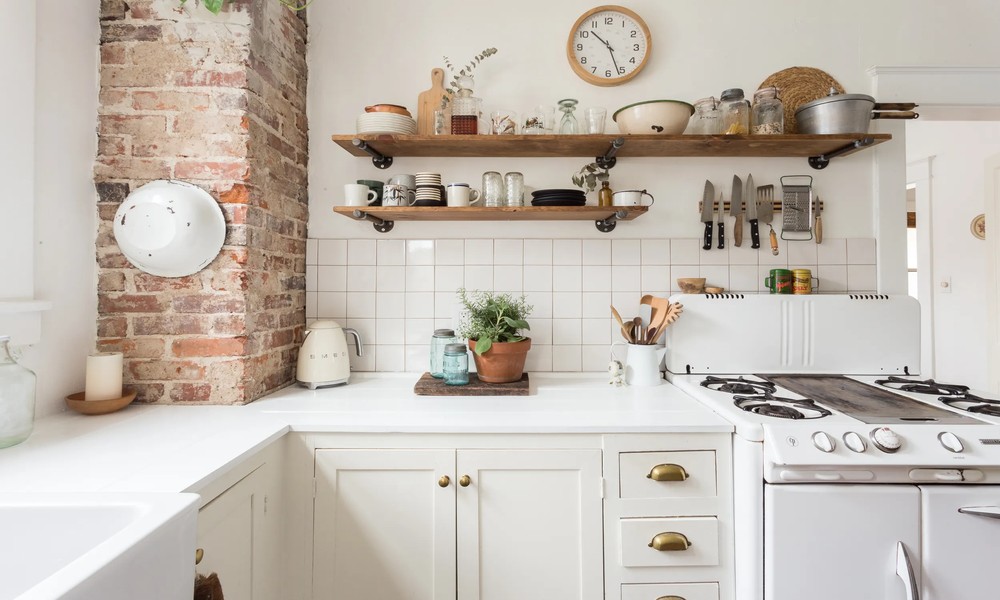
There is a reason all-white kitchens became so popular in the first place.
They feel bright, clean, and timeless in a way few other kitchen styles do. White cabinetry reflects light beautifully, makes smaller spaces feel larger, and creates a sense of visual calm that many people find deeply appealing. In photographs especially, white kitchens often look effortlessly elegant – crisp marble counters, soft daylight pouring through windows, open shelving styled perfectly against pale walls.
And yet, in real life, all-white kitchens can sometimes feel unexpectedly cold.
Not physically cold, necessarily, but emotionally distant. The room begins to feel overly polished, almost clinical, particularly once natural light disappears in the evening. Without enough texture, warmth, or contrast, even beautiful white kitchens can lose the softness that makes people actually want to gather there.
Designers understand this balance instinctively.
The goal is rarely to abandon the brightness of a white kitchen altogether. Instead, it is about layering warmth into the space so the room still feels airy while becoming more inviting and lived in. The best white kitchens retain their freshness but gain texture, atmosphere, and depth through carefully chosen materials and details.
And interestingly, warmth often comes less from dramatic colour and more from subtle contrast.
Natural wood, softer lighting, woven textures, warm metals, layered fabrics, and thoughtful window treatments can completely transform the emotional feeling of an all-white kitchen without compromising its clean aesthetic.
Wood Is Often the Fastest Way to Warm Up White Kitchens
One of the reasons some white kitchens feel sterile is because too many surfaces share the same visual temperature. White cabinetry, pale stone, glossy tiles, stainless steel appliances, and bright lighting can create an environment that feels overly sharp if nothing interrupts it.
Wood changes this almost immediately.
Natural wood introduces variation, grain, and warmth in a way painted finishes cannot replicate. Even small additions – oak stools, walnut cutting boards, open wood shelving, or a reclaimed dining table – soften the room because organic materials carry visual movement and imperfection.
This contrast is what makes the kitchen feel balanced.
Designers often rely on wood strategically in white kitchens because it prevents the space from feeling flat. A white marble island paired with warm oak stools suddenly feels far more inviting. Wooden utensils resting against white counters add softness quietly without cluttering the space.
And importantly, the wood does not need to match perfectly. In fact, slight tonal variation often makes the room feel more natural and collected over time.
The goal is not rusticity necessarily. It is warmth.
Lighting Changes the Entire Emotional Atmosphere
Lighting is one of the biggest reasons white kitchens can feel cold after sunset.
During the day, natural light softens white surfaces beautifully. But once evening arrives, harsh overhead lighting can flatten the entire room, making cabinetry appear stark and reflective instead of warm and welcoming.
Designers almost never rely solely on ceiling lighting in kitchens for this reason.
Instead, they layer illumination carefully. Under-cabinet lighting, sconces, pendants, table lamps, and softer ambient sources create depth throughout the room rather than flooding everything with brightness from above.
Warm bulb temperature matters enormously too.
Cool white bulbs tend to exaggerate the sharpness of white surfaces, while warmer lighting softens the entire kitchen instantly. White cabinetry begins reflecting a creamier glow rather than appearing icy. Wood tones deepen. Stone surfaces gain dimension.
This shift feels subtle but dramatically changes how the room is experienced emotionally.
Some designers even place small lamps on kitchen counters or open shelving because pools of low warm light make kitchens feel significantly more intimate during evenings. The room stops feeling purely functional and begins feeling lived in.
Window Treatments Soften Hard Surfaces Beautifully
Kitchens often contain many acoustically and visually hard materials – tile, stone, metal, glass, and cabinetry. Without softness layered in intentionally, the room can begin feeling echo-heavy and overly rigid.
Window treatments help solve this beautifully.
Custom roman shades work especially well in kitchens because they add softness without overwhelming the space visually. Tailored linen romans, woven shades, or lightly textured fabrics soften incoming light and introduce warmth against white walls and cabinetry.
The effect becomes especially noticeable in the afternoon when sunlight filters gently through fabric rather than hitting hard surfaces directly.
Café curtains can also work beautifully in white kitchens, particularly in older homes or spaces aiming for a softer European atmosphere. Light linen panels framing a sink window create movement and texture while still preserving brightness.
And importantly, fabric changes acoustics too. Kitchens filled entirely with hard surfaces often feel louder and less relaxing. Soft layered textiles absorb sound gently, making the space feel calmer overall.
Texture Is What Prevents White Kitchens From Feeling Flat
Many people attempt to warm up white kitchens by adding bold colour, but often what the room truly needs is texture instead.
Some of the most beautiful white kitchens remain relatively neutral while still feeling deeply inviting because the materials themselves create depth. Designers layer variation through:
- woven bar stools
- matte ceramics
- textured stone
- natural linen custom curtains and towels
- wood grain
- plaster finishes
- aged metals
These details prevent the room from becoming visually one-dimensional.
Texture matters especially in monochromatic interiors because without it, everything can begin blending together too smoothly. White kitchens need shadow, softness, and material contrast to feel alive.
This is why matte finishes often feel warmer than glossy ones. Why handmade ceramics soften minimalist kitchens beautifully. Why natural woven elements make white cabinetry feel less severe.
The warmth comes through tactility rather than excessive decoration.
Warm Metals Add Quiet Richness
Metal finishes influence emotional atmosphere more than people realise.
Polished chrome and bright stainless steel can sometimes reinforce the coolness of an all-white kitchen, particularly when combined with stark lighting and glossy surfaces. Designers often counterbalance this through warmer metals that introduce softness subtly.
Aged brass, brushed bronze, copper, and unlacquered finishes all add depth because they contain warmth naturally. Cabinet hardware, faucets, light fixtures, and shelving brackets become opportunities to layer richer tones into the room without overwhelming its simplicity.
These details may seem small individually, yet together they shape whether the kitchen feels cold or inviting.
And importantly, warmer metals age beautifully. Patina and wear often make the kitchen feel even more layered over time rather than less polished.
Softness Matters More Than Perfection
One reason some white kitchens feel intimidating is because they appear designed more for display than for living.
Perfectly styled counters, completely empty surfaces, and overly pristine finishes can create rooms that feel emotionally distant, even when visually stunning.
Designers usually soften this by allowing signs of life into the space.
A linen tea towel draped casually near the sink. Wooden cutting boards left visible against the backsplash. Bowls of citrus on the counter. Open shelving with everyday ceramics instead of purely decorative objects.
These small details make the kitchen feel inhabited.
And ultimately, warmth comes less from achieving perfect styling and more from creating a room people genuinely want to spend time in.
The Best White Kitchens Still Feel Human
All-white kitchens remain timeless for a reason. Their brightness and simplicity create incredible versatility and calmness within a home.
But the kitchens people remember most are rarely the starkest ones.
They are the kitchens softened by warm wood, fabric furnishings like sheer roman shades and linen napkins, layered lighting, aged metals, filtered sunlight, and signs of everyday life. The spaces where white surfaces still feel airy and fresh, yet the atmosphere remains warm enough to invite people to linger long after dinner has ended.
Because ultimately, good kitchen design is not only about cleanliness or aesthetics.
It is about creating a room that feels welcoming at every hour of the day.
And warmth is what transforms a beautiful kitchen into one people truly love living in.
