

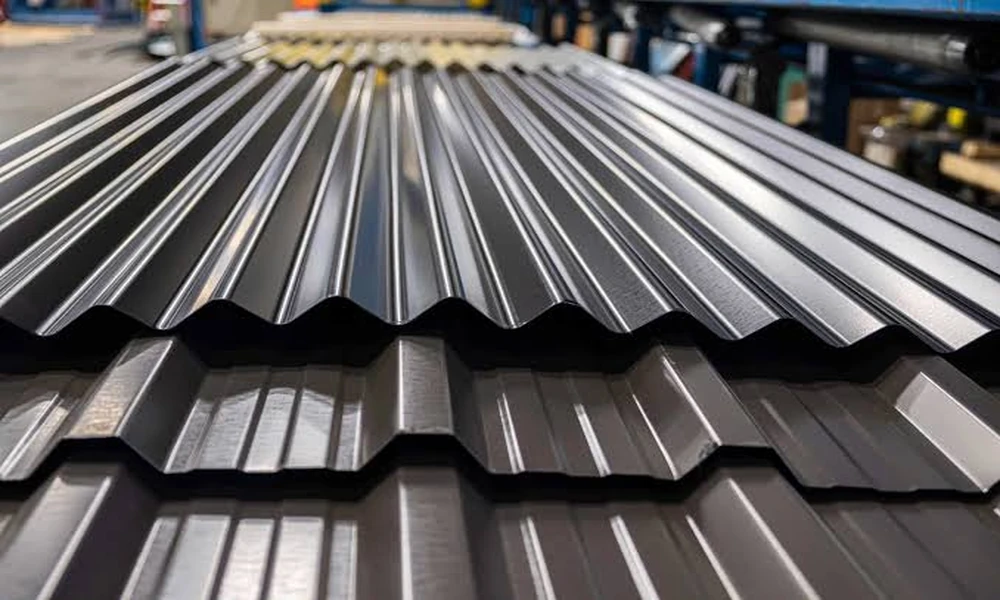
A standing seam roof does not arrive at a house as a stack of finished panels. On a growing number of south Louisiana jobs it shows up as a heavy coil of painted steel, gets fed through a forming machine parked in the driveway, and leaves the machine as one long panel cut to the exact run of that particular roof. Every stop along that path decides how the roof handles July heat, sideways rain and the occasional hurricane band.
Roofers who own their own standing seam equipment, and Cannon’s Contracting in Walker is one of them, can bend panels and matching trim to the measurements of the house in front of them instead of ordering stock lengths from a plant several states away. Knowing what happens at each stage helps a homeowner compare proposals fairly and spot shortcuts early.
Everything Starts With What Is Wound on the Coil
Before anyone climbs a ladder, three choices are already locked into the steel itself.
- The base metal. Most residential panels use steel coated with an aluminum and zinc alloy, often sold as Galvalume, which resists rust better than plain galvanized steel in humid air. Homes right on brackish water sometimes justify aluminum panels instead, though they cost more and dent more easily.
- The thickness. Residential standing seam usually comes in 24 or 26 gauge, and the smaller number is the thicker sheet. The 24 gauge option shows less waviness, holds up better to foot traffic during service calls and handles hail with fewer visible dings.
- The paint system. PVDF coatings, sometimes listed under the Kynar name, hold their color and gloss far longer under strong sun than the cheaper SMP finishes.
A proposal that names all three is worth more than one that simply says “metal roof,” and asking for the coil specification sheet is a fair request.
Panels Born in the Driveway
Once the coil is chosen, it goes through a rollformer, a machine that presses the flat sheet into ribs and pans as it feeds through.
Panels can run in one continuous piece from eave to ridge, which removes the overlapping end laps where water likes to creep in during wind driven rain. Long panels shipped by truck often get creased in transit, and crews can adjust lengths on the spot when a rafter line on an older house runs slightly off.
There is one cosmetic issue worth raising early. Wide flat pans can show a rippled look called oil canning, especially when sunlight rakes across them in the late afternoon. It does not hurt performance, and panels formed with light striations or small pencil ribs in the flat areas hide it well.
The Seam Is Where the Wind Gets Argued With
The raised joint between panels gives this roof its name and most of its strength. Two broad families exist. Snap lock seams click together by hand and install quickly. Mechanical lock seams are folded over by a motorized seamer, either once at a right angle or twice into a tight roll, and they grip far harder when wind tries to peel panels upward.
On low slopes, on houses in open fields and anywhere a roof catches the full force of a Gulf storm, the double folded seam earns its higher price.
Wind resistance does not live in the seam alone, though. Deck attachment, edge metal and a sealed roof deck all matter, and those are exactly the details the FORTIFIED Roof standard checks. Louisiana homeowners replacing an aging roof may be able to offset part of the cost through the state’s Fortify Homes Program, which offers grants of up to $10,000 when the work is done by an approved contractor and verified by a certified evaluator. A finished FORTIFIED designation can also lower insurance premiums.
Letting Steel Breathe Under the Gulf Sun
Metal grows and shrinks with temperature, and a dark roof in south Louisiana can swing well over a hundred degrees between a January night and an August afternoon. A thirty foot steel panel moves roughly a quarter of an inch across that range. Screwing it down rigidly through the face would eventually wallow out the holes and invite leaks.
Standing seam handles this through concealed clips. A few fixed clips near one point hold the panel in place, while sliding clips along the rest of its length let it travel without tearing at the fasteners. With no exposed screw heads, these systems outlast exposed fastener metal by decades.
What sits under the panels deserves the same attention. Metal gets hot enough to soften ordinary felt or certain adhesive membranes, so crews should be using a synthetic or self adhered underlayment rated for high temperatures. Good attic ventilation keeps humid air from condensing under the deck and rotting the plywood.
Trim Work Separates a Good Roof From a Leaky One
Panels cover most of the area, but nearly every leak on a metal roof starts at a transition. Chimneys, valleys, sidewalls, skylights, plumbing vents and the ridge all need flashing shaped to fit. Shops that bend their own trim from the same coil as the panels get an exact color match and can fold custom pieces for odd angles rather than forcing a stock profile into place.
A few smaller habits separate careful crews from rushed ones. Cutting and drilling throws off tiny steel shavings, and any left on the surface rust within days and leave orange streaks that look like the roof itself is failing. Good installers sweep them away before leaving each section. They also keep copper, lead flashing and treated lumber from touching or draining onto the panels, since those materials trigger corrosion on aluminum zinc coatings. Pipe boots should be made for metal roofs, with flexible bases that follow the rib shape.
Living Under It for the Next Few Decades
The worry most people bring up first is noise. Over solid decking and underlayment, rain on a standing seam roof sounds little different from rain on shingles inside the house. The loud metal roofs people remember are usually barns and porch covers with panels screwed directly over open framing.
Hail is a fairer concern. A large stone can dent panels without breaking the paint or letting water in, and many insurance policies now carry cosmetic damage exclusions for metal roofs. Reading that clause before choosing a gauge can steer the decision toward the thicker steel.
Solar fits neatly onto this kind of roof, since clamps grip the raised seams and nothing needs to be drilled through the panels.
Routine care stays light. A look after major storms, clearing leaves out of valleys, checking sealant around penetrations every few years and staying off the flat pans unless there is a real reason to walk them will keep a properly built roof doing its job for forty years or more. The steel on the coil, the way it was formed and the hands that seamed and flashed it will have far more to say about that lifespan than anything that happens afterward.
