

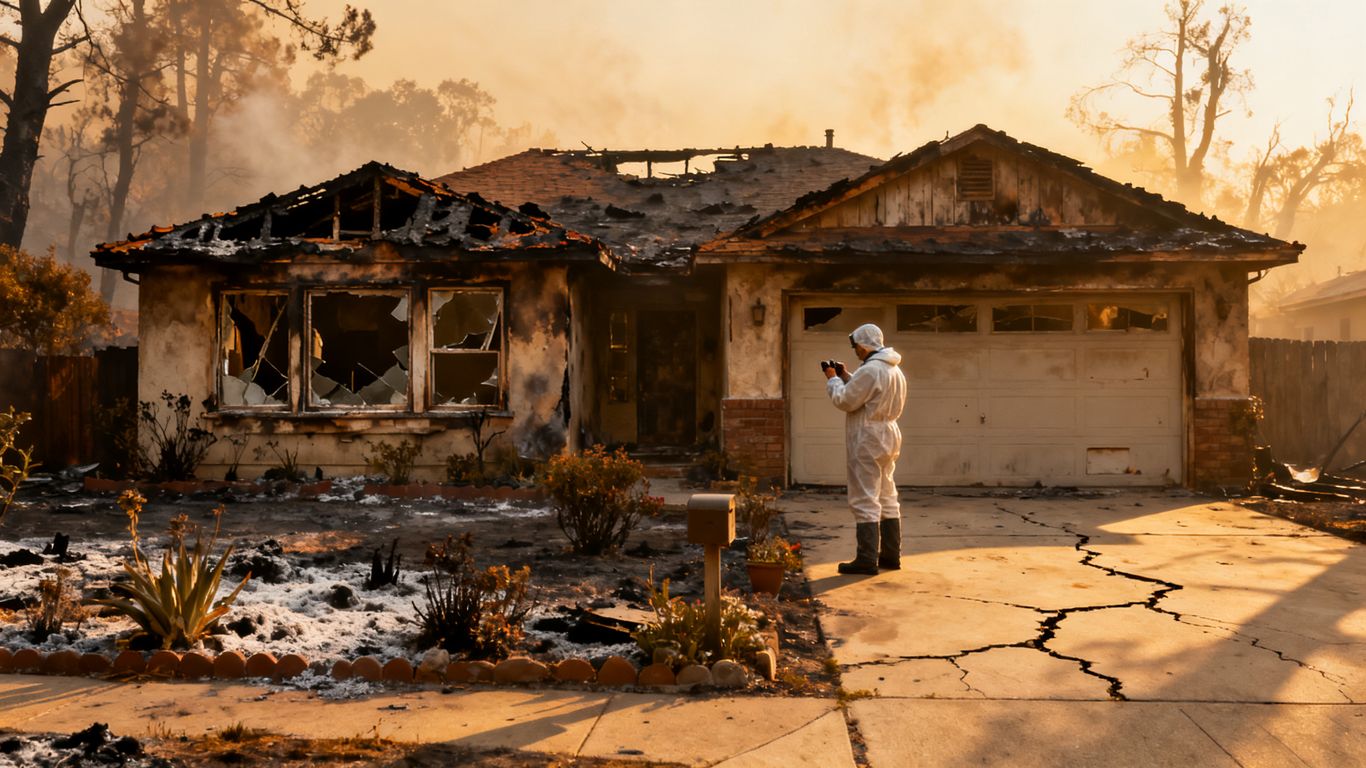
A wildfire can leave a property looking familiar while making it unsafe to enter. Before assessing home damage after wildfire, the property owner should confirm that local officials have authorized access and should follow any posted restrictions. The first visit is for observation and documentation, not for beginning cleanup or repairs.
Confirm that officials have cleared the property
The owner should check with the relevant fire, emergency management, building, or utility authority before approaching the home. A property may have an inspection tag or other notice that limits entry to certain rooms or prohibits entry altogether. Even when the structure appears intact, conditions may have changed since the official assessment, so clearance should be current rather than assumed.
Identify immediate hazards such as unstable structures and downed lines
From a safe distance, the owner can look for leaning walls, collapsed roof sections, broken poles, hanging wires, damaged gas lines, and trees that may fall. Ash-covered ground can conceal holes, sharp debris, hot spots, and unstable surfaces. No wire, pipe, appliance, or structural member should be touched simply to determine whether it is live or secure.
Use appropriate protective equipment and limit exposure
Authorized visitors should wear sturdy closed-toe footwear, gloves, eye protection, and clothing that covers the skin. A properly fitted respirator may be needed where smoke, ash, or fine debris remains, but protective equipment does not make a severely damaged building safe. Visits should be brief, and food, drinks, or bare hands should not be exposed to contaminated surfaces.
Know when to stop the inspection and call a professional
A shifting floor, sagging ceiling, strong gas odor, sparking equipment, or unexplained heat is a reason to leave immediately. Structural engineers, electricians, gas professionals, industrial hygienists, and other qualified specialists may be needed depending on the hazard. The owner should avoid entering enclosed areas or disturbing suspicious materials until the appropriate professional has evaluated them.
Inspect the exterior and structural shell
The exterior provides an early picture of how heat, flames, water, and falling debris affected the home. It should be examined from several angles before anyone moves closer or enters. Notes should distinguish visible fire damage from damage caused by firefighting, wind, or later exposure to rain.
Check the roof, chimneys, gutters, and vents for fire damage
The roof should be checked for missing coverings, softened or charred materials, holes, sagging planes, and debris lodged near vents. Chimneys may have cracked masonry or damaged flashing, while gutters and downspouts can be warped or filled with ash. Because roof damage is difficult to judge from ground level, unsafe climbs should be left to qualified inspectors.
Look for cracks, warping, shifting, or heat damage in walls and foundations
Exterior walls, masonry, retaining walls, and visible foundation areas should be examined for new cracks, bulges, separation, discoloration, or signs of movement. Heat can warp metal and damage framing without creating an obvious opening. A door or window that suddenly sticks may signal movement in the surrounding structure, not merely a cosmetic problem.
Examine windows, doors, siding, decks, and attached structures
Broken glazing, melted frames, burned siding, warped doors, and damaged seals can allow ash and moisture to enter. Decks, porches, carports, fences, and sheds should be inspected for weakened connections and partially burned supports. Photographs from the same positions can help show the condition of each elevation before temporary protection is installed.
Inspect the attic, crawl spaces, garage, and outbuildings
These areas often contain concealed framing, insulation, wiring, stored belongings, and ventilation paths that may have been affected by heat or smoke. Access should occur only when officials have permitted it and the structure has been judged stable. A professional may need to open limited areas to determine whether damage extends behind finished surfaces.
Assess living rooms, bedrooms, and hallways
Rooms that did not burn can still carry smoke, ash, water, and odor damage. The inspection should move slowly from floor to ceiling, with attention to materials that absorbed contaminants. A smoke and ash damage guide can help the owner organize questions about inspection, testing, cleaning, restoration, and insurance documentation.
Distinguish smoke and ash contamination from direct fire damage
Direct fire damage may include charring, melting, blistering, and complete loss of materials. Smoke and ash contamination can appear as film, staining, odor, or fine particles on surfaces that otherwise look whole. The distinction matters for both treatment and documentation, but the absence of visible soot does not prove that a room is unaffected.
Check ceilings, walls, flooring, and built-in features
Ceilings and walls should be checked for staining, bubbling paint, cracked finishes, warped panels, and water marks. Flooring may have absorbed water or developed soft areas beneath rugs and furniture. Built-in shelving, trim, doors, and cabinets should be opened carefully, since heat and moisture can affect their edges, fasteners, and concealed backing.
Evaluate furniture, mattresses, textiles, and personal belongings
Furniture, mattresses, curtains, rugs, clothing, books, electronics, and photographs should be separated from visibly damaged materials without spreading ash through the home. Items with odor or residue may require specialized evaluation before cleaning or disposal. The owner should record the item, condition, location, and approximate age rather than relying on memory later.
Look for hidden damage around stairs, closets, and wall cavities
Stairs and railings should be tested visually, not by placing weight on them, for loosened connections, heat distortion, or burned supports. Closets can reveal smoke paths, damp insulation, and damage behind stored items. Wall cavities and service openings may hold ash or combustion residue, so removal of panels or insulation should be assigned to a qualified professional.
Examine the kitchen and food storage areas
Kitchens combine combustible contents with gas, electricity, plumbing, heat, and ventilation. Damage may therefore be scattered across several systems even when cabinets remain standing. The inspection should focus on safety and contamination first, leaving testing and reconnection to licensed professionals.
Inspect cabinets, countertops, flooring, and appliances
Cabinets should be checked for charred edges, swollen panels, loose hinges, smoke residue, and water intrusion. Countertops and flooring may be cracked, stained, warped, or contaminated beneath appliances. Refrigerators, ranges, dishwashers, microwaves, and other equipment should be treated as potentially unsafe until their electrical, gas, and internal components have been evaluated.
Check plumbing connections and electrical outlets for heat or water damage
The owner should look for melted insulation, discolored outlets, loose faceplates, leaking supply lines, damaged shutoff valves, and water beneath cabinets. These observations should be photographed, but outlets and circuits should not be tested by switching them on. Heat, soot, and water can damage components inside walls and boxes where the problem is not immediately visible.
Determine whether food, cookware, and small appliances are contaminated
Food exposed to heat, smoke, ash, or firefighting water should not be assumed safe because its packaging looks closed. Cookware, dishes, utensils, cutting boards, and small appliances may retain residue or odor in seams and porous materials. Items should be documented before disposal, and questionable materials should be evaluated according to local health guidance and insurance requirements.
Document damage to ventilation systems and fire suppression equipment
Range hoods, filters, exhaust ducts, sprinklers, extinguishers, and other suppression equipment should be inspected for soot, heat damage, water exposure, or displacement. A damaged hood or duct can spread residue into adjoining areas. The condition of these systems should be recorded before cleaning or replacement changes the evidence.
Evaluate bathrooms, laundry rooms, and utility spaces
Bathrooms and utility areas can show a different pattern of damage because they contain dense plumbing, electrical equipment, and moisture-sensitive finishes. Water used during firefighting may also collect in places that were not directly burned. These spaces deserve the same careful documentation as living areas, even when the damage initially appears minor.
Check fixtures, pipes, drains, and water heaters for damage
Sinks, toilets, tubs, showers, supply pipes, drains, valves, and water heaters should be checked for cracks, displacement, leaks, melted fittings, and corrosion. A water heater may have shifted or suffered heat damage while still appearing operational. Water should not be turned on until the plumbing system and affected structure have been cleared for use.
Inspect washing machines, dryers, and nearby electrical connections
Washing machines and dryers should be examined for soot, melted controls, damaged hoses, warped casings, and water exposure. Their cords, receptacles, vent connections, and nearby walls may also be affected. Appliances should remain disconnected until an appropriate technician determines that they can be safely tested.
Look for moisture, mold risk, and damaged drywall or insulation
Wet drywall, swollen baseboards, damp cabinets, and saturated insulation can deteriorate after the fire even without additional rainfall. Musty odor, staining, and persistent humidity may indicate conditions that require prompt professional attention. Materials should not be opened or removed casually if doing so could release contaminated dust.
Separate salvageable materials from items requiring disposal
Salvage decisions should consider porosity, contamination, structural condition, odor, and the cost and safety of restoration. Hard, nonporous items may sometimes be evaluated for cleaning, while damaged insulation, heavily contaminated porous materials, and compromised building components may require disposal. The owner should keep questionable items together and photograph them before anything is discarded.
Assess indoor air quality and essential building systems
A home can look clean while its air and mechanical systems still carry smoke particles or combustion residues. Building systems also connect multiple rooms, so damage in one location may affect areas that were not near the flames. Any decision to reoccupy the property should follow professional evaluation of the systems that supply power, air, fuel, and water.
Examine electrical panels, wiring, outlets, and service equipment
Electrical panels, breakers, meter equipment, wiring, outlets, switches, and fixtures should be checked for melting, soot, corrosion, displaced components, and water damage. The service should remain off when damage is suspected. Only a qualified electrician or utility professional should determine whether equipment can be isolated, repaired, or replaced.
Evaluate HVAC units, ductwork, filters, and air circulation
Furnaces, heat pumps, air conditioners, air handlers, filters, returns, and supply ducts can draw in smoke and ash. Damaged insulation, contaminated filters, and residue inside ducts may distribute particles throughout the home when the system operates. HVAC equipment should not be restarted merely to clear an odor; it should first be assessed and cleaned or replaced as appropriate.
Check gas lines, fuel systems, plumbing, and backup power equipment
Gas piping, propane or fuel storage, generators, batteries, pumps, and related connections should be examined only by professionals qualified for those systems. Heat can damage regulators, hoses, seals, and controls without producing an obvious leak. Plumbing and backup power equipment should also be kept out of service until their condition and surroundings have been reviewed.
Identify lingering smoke odors, soot, ash, and hazardous residues
Odor, soot, ash, and combustion by-products may remain in wall surfaces, insulation, ducts, crawl spaces, and personal belongings. Some residues can present environmental concerns that are not resolved by ordinary household cleaning. For complex conditions, a professional fire and smoke assessment may help identify cleanup limits, hazardous materials, monitoring needs, and clearance requirements.
Document findings and plan repairs or remediation
A careful record turns a stressful walkthrough into information that insurers, engineers, contractors, and public agencies can use. The owner should preserve original photos and notes, avoid premature cleaning where possible, and keep receipts for authorized temporary work. A wildfire damage assessment guide provides a useful reminder to combine safety checks with photographs, notes, and early communication about recovery.
Photograph each room and create a detailed damage inventory
Photographs should show the room as a whole before moving to close views of individual materials and belongings. Each image should be paired with the date, location, and a short description, while video can document water flow, odors, or the relationship between damaged areas. A room-by-room inventory is more reliable when it includes undamaged areas as well as losses.
Record structural, cosmetic, personal property, and smoke-related losses
The inventory should separate structural components from finishes, appliances, furnishings, clothing, documents, and other personal property. It should also identify smoke, ash, water, and direct fire effects rather than grouping every loss under one description. Public datasets such as fire impact structure records may provide broader context in some regions, but they do not replace a property-specific inspection.
Coordinate inspections with insurers, contractors, and public agencies
The owner should notify the insurer promptly, ask which inspections and testing are authorized, and retain copies of reports and correspondence. Building officials, utility providers, environmental professionals, and contractors may each address a different part of the recovery. Independent observations should be shared clearly without allowing one preliminary opinion to substitute for a structural, electrical, or environmental evaluation that the property needs.
Prioritize temporary protection, cleaning, restoration, or reconstruction
The first priorities are keeping people out of unsafe areas, preventing additional weather or water damage, and protecting records and belongings without disturbing hazards. After that, the plan can distinguish cleaning and restoration from demolition, replacement, and reconstruction. Safety comes before speed; a slower, documented sequence usually produces better decisions than rushing to make the home look habitable.
