

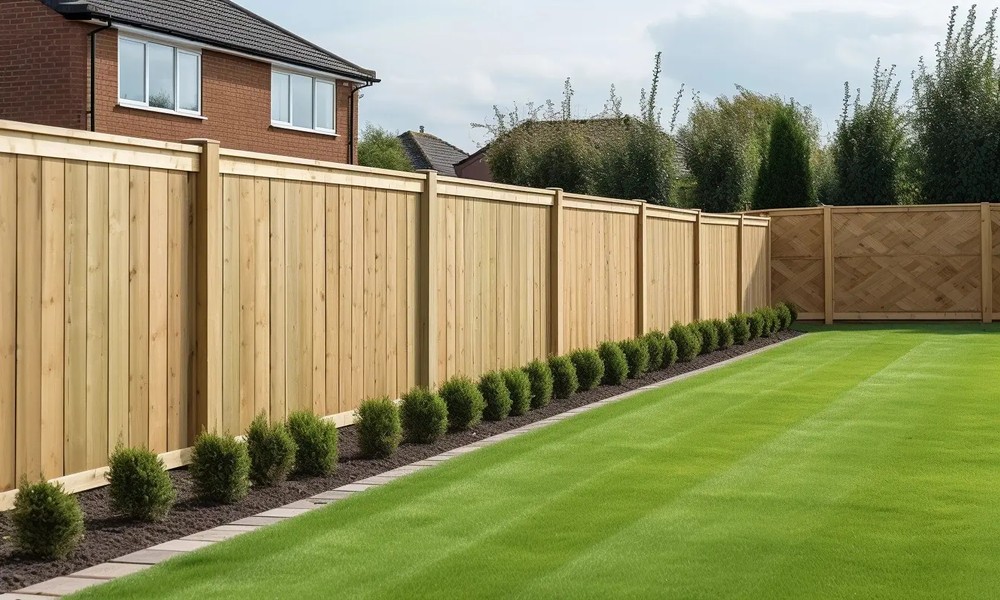
Drive around Leeds at the moment and you’ll notice something that wasn’t nearly as common ten years ago – entire rows of fencing being replaced long before anyone expected.
Not repaired. Fully replaced.
I’ve worked on fencing jobs across West Yorkshire for decades and there’s definitely been a shift. More homeowners are searching for fencing near me services after only ten or twelve years, sometimes less. Years ago, decent timber fencing could comfortably push past fifteen years if it had been installed properly and maintained now and again.
That’s not always happening anymore.
Part of it is weather. Part of it is material quality. Part of it is how modern housing estates are built. Some of it comes down to rushed installation work and poor groundwork. And some homeowners are simply less willing to tolerate tired-looking fencing than they used to be.
You can usually tell within five minutes of arriving on site whether a fence was built to last or built to hit a price point.
The difference matters more now than ever.
Leeds Gardens Are Harder On Fencing Than People Realise
One thing I see often on local jobs is homeowners blaming the panels when the real issue sits underground.
Leeds soil can be awkward. In some areas you’re digging into thick clay that holds water for weeks during winter. In others, especially newer developments, you hit rubble, old brick, shallow fill material or compacted builders’ waste. That changes how posts behave over time.
A lot of fence failures actually begin below ground level.
The average homeowner sees a leaning panel and assumes the timber has failed. More often, the post base has started rotting because water has nowhere to drain. Once movement starts, wind does the rest.
Typical post depths around Leeds really should sit around 600mm minimum for standard domestic fencing. On exposed gardens or sloping ground, deeper again. Yet I still come across installations where posts barely reach 450mm because somebody wanted to save time or concrete.
You can spot it immediately after heavy rain and strong wind.
The fence starts “walking”.
Not collapsing outright at first. Just shifting slightly. Then the gates stop lining up. Then one panel rattles more than the others. A few months later the homeowner is searching for fence repair near me after the first proper storm of winter.
Cheap Timber Has Changed The Industry
This is the bit some people in the trade don’t like talking about.
Not all treated timber is equal anymore.
Years ago, even standard fence panels often felt heavier and denser. You’d unload them and immediately know there was substance there. Modern budget panels can feel alarmingly light before they’ve even been installed.
That matters.
Pressure treatment processes have improved in some ways, but a lot of lower-cost fencing timber now grows faster and contains more moisture when manufactured. Some boards twist badly after a single hot summer. Featheredge boards shrink faster. Rails crack earlier.
You especially notice it on south-facing gardens during hot spells.
Last summer we replaced several runs of fencing where the posts remained solid but entire panels had warped beyond repair after repeated cycles of heat followed by sudden rain. Timber movement has become much more aggressive over the past few years.
Many homeowners in Leeds ask me whether composite fencing solves all these issues. Honestly – sometimes yes, sometimes no.
Composite fencing deals with moisture differently and removes many rot problems, but it introduces other considerations like thermal expansion and installation accuracy. Poorly installed composite systems can look awful within a year. I’ve seen sections bow because installers ignored expansion gaps completely.
There’s no miracle product in fencing. Good installation still matters more than most people think.
New Build Gardens Are Creating More Problems
Modern estates are probably responsible for a huge chunk of premature fence replacement work.
The pressure on developers to maximise plots means gardens are often smaller, drainage is tighter, and access for future maintenance is worse. You also get fencing installed incredibly quickly near the end of builds when timelines are under pressure.
That combination rarely helps longevity.
On newer estates around Leeds, Bradford and Wakefield, I regularly find:
- shallow post installation
- poor concrete curing
- weak gravel boards
- badly compacted soil
- drainage problems near boundaries
- fences installed during saturated winter conditions
Then homeowners move in assuming everything is new and built properly.
Three or four winters later, problems begin appearing one house at a time.
The other issue is wind exposure. New housing developments often have very little mature planting initially. No hedges. No established trees. No natural wind breaks. Fencing takes the full force of crosswinds during storms.
That batters lightweight panels.
Some developers also favour cheaper lap panel systems because they’re quick to install across hundreds of plots. They look tidy initially but many simply aren’t designed for harsh northern weather over long periods.
Storm Damage Is Becoming More Expensive
The cost side has changed massively.
A few years ago, many homeowners would repair isolated sections after storms. Now entire runs often need replacing because matching older panels becomes difficult or the original timber quality was already declining.
Material prices also climbed sharply after supply chain disruption and never really returned to old levels.
People still expect fencing quotes from 2018.
That world has gone.
Concrete costs more. Timber costs more. Labour costs more. Waste disposal costs more. Even fixing a relatively small section properly now involves significant groundwork if the old concrete has to come out.
Removing failed posts is one of the most underestimated parts of fence installation.
Old concrete bases can be brutal, especially when they’ve fused into heavy clay ground over fifteen years. Sometimes you spend more time extracting failed posts than installing the replacement fencing itself.
That’s why experienced fencing contractors often price differently to someone advertising quick cash jobs online.
You’re paying for groundwork knowledge as much as visible fencing.
Homeowners Expect More From Garden Spaces Now
Another reason fences get replaced earlier is simple.
People care more about gardens than they used to.
Gardens became proper living spaces over recent years. Outdoor dining, garden offices, entertaining areas, hot tubs, covered seating spaces – fencing suddenly became part of the visual design rather than just a boundary marker.
That changes buying behaviour.
A faded or leaning fence now bothers homeowners much sooner because they actually use the garden regularly.
One thing I’ve noticed recently is how many people now prioritise privacy. Taller fencing requests have increased massively, especially in dense suburban areas where overlooked gardens are common.
Slatted fencing has become particularly popular because it softens the appearance while still creating separation. Done properly, it looks excellent.
Done badly, it can become a wind sail.
That’s another thing social media has introduced into fencing. People see Pinterest-style garden designs that look fantastic in sheltered show gardens but aren’t always suited to exposed Yorkshire conditions.
I’ve had customers request ultra-modern horizontal slat systems in locations where I already know winter winds will hammer them sideways unless heavily reinforced.
Sometimes experience means gently talking people out of fashionable mistakes.
Fence Repairs Often Get Left Too Long
Most fencing repairs are cheaper earlier.
That sounds obvious but it’s amazing how often small movement gets ignored until replacement becomes unavoidable.
A loose post today becomes three failed panels after the next storm.
Rot spreads surprisingly quickly once moisture gets inside untreated cuts or cracked timber. This happens a lot around gates because gates place constant pressure on hinge posts.
If a gate starts dropping slightly, don’t ignore it.
That tiny change usually means movement has already started underground.
From years on site, I’d say the most commonly neglected issues are:
- loose post movement
- cracked arris rails
- poor drainage around posts
- untreated timber cuts
- gravel boards sitting below soil level
- climbing plants trapping moisture
- leaning gates
People often search for fencing contractor near me services after visible collapse, but most major failures give warnings months beforehand.
You just need to know what to look for.
Composite Fencing Costs Still Shock Some Homeowners
Composite fencing is growing quickly across Leeds but the cost gap still catches people off guard.
The material itself costs considerably more than standard timber systems, especially when combined with aluminium posts and matching trims.
Some homeowners expect composite fencing cost to be only slightly higher than timber.
Usually it isn’t.
That said, long-term maintenance can balance things out for certain households. Composite works particularly well for homeowners who simply don’t want ongoing staining, painting or regular panel replacement.
It also suits rental properties surprisingly well because tenants rarely maintain timber properly over long periods.
But again, installation quality matters massively.
Poor composite installations stand out immediately because the lines need to stay perfectly level. Tiny errors become very visible. You cannot hide poor groundwork behind modern materials.
I’ve seen expensive composite jobs ruined because installers treated it like ordinary timber fencing.
It isn’t.
Leeds Weather Patterns Have Changed
You can argue about climate trends all day but from a fencing perspective, conditions definitely feel harsher than they once did.
We seem to get longer wet spells followed by sudden dry heat. Strong gusty storms appear more frequently during winter. Saturated ground remains waterlogged for longer periods.
That combination destroys weak fencing.
Heavy clay soils around Leeds expand and contract repeatedly through the seasons. Posts shift gradually over time. Water sits around bases for months. Then summer heat dries everything rapidly.
That movement stresses joints constantly.
Autumn has become especially important for maintenance because once winter saturation arrives, existing weaknesses worsen fast.
Many homeowners leave repairs until spring because they don’t want work carried out during colder months. Honestly, autumn is often the smarter time to act. Ground conditions are usually better and contractors can address problems before winter storms expose them fully.
Fence Installation Has Become More Technical
People sometimes assume fencing is straightforward.
Dig hole. Insert post. Attach panel.
Proper fence installation is far more technical than that, especially in awkward ground conditions.
Experienced installers constantly adjust for:
- drainage
- soil type
- wind exposure
- boundary lines
- retaining pressure
- root systems
- underground services
- slope changes
- water runoff
- access limitations
Even something simple like post spacing changes depending on panel weight and exposure.
One thing I see often on local jobs is fencing installed perfectly level across sloping gardens because somebody prioritised appearance over practicality. Then gravel boards end up partially buried, trapping moisture and accelerating rot.
Sometimes slightly stepped fencing lasts far longer.
Practicality matters.
More Homeowners Are Researching Before Buying
There’s been a noticeable shift in customer knowledge too.
People now spend longer researching fencing services before committing. They compare materials more carefully. They understand maintenance differences better. They ask smarter questions.
Honestly, that’s usually a good thing.
The best customers are often the ones who’ve already realised the cheapest quote rarely stays cheapest long-term.
Experienced fencing contractors near me searches now tend to come from homeowners wanting proper groundwork and longevity rather than quick cosmetic fixes.
And fair enough.
Nobody wants to replace fencing twice within ten years.
The Best Fences Usually Look Slightly Boring
This might sound strange coming from someone in the trade, but the best long-lasting fences are rarely the flashiest.
Solid posts. Proper depth. Good drainage. Decent airflow. Quality fixings. Correct spacing.
That’s what keeps fencing standing.
Some of the strongest fences I still see around Leeds were installed fifteen or twenty years ago using straightforward featheredge systems with proper concrete posts and gravel boards. Nothing fashionable. Nothing particularly exciting.
Just sensible installation work done properly.
Meanwhile, I’ve seen expensive decorative systems fail within a few winters because appearance came first and structure came second.
A fence doesn’t care what trend is popular online.
It cares whether water drains properly and whether the posts are stable.
That never changes.
